



ERRγ
ERRγ (ESRRG/NR3B3) is a constitutively active nuclear receptor that functions as a transcriptional regulator without an identified physiological ligand[1]. Mechanistically, ERRγ coordinates oxidative metabolism: in skeletal muscle, ERRγ expression drives fat metabolism, mitochondrial respiration, type I fiber specification, angiogenesis, mitochondrial biogenesis, antioxidant defense, and oxidative remodeling[2][3]. In cardiac muscle, ERRα and ERRγ jointly regulate cardiomyocyte metabolism and function, showing functional overlap in high-energy tissues[4]. In liver models, ERRγ coordinates endocrine and metabolic signals that alter glucose, lipid, alcohol, and iron metabolism, linking ERRγ dysregulation to hyperglycemia, insulin resistance, and alcoholic liver injury[5]. In cancer models, ERRγ induces E-cadherin, promotes mesenchymal-to-epithelial transition, and suppresses breast tumor growth, while gastric cancer studies identify ESRRG as a negative regulator of Wnt signaling and a tumor suppressor[6][7]. Compared with related isoforms, ERRα and ERRγ share metabolic transcriptional roles, whereas ERRβ is less defined metabolically and is linked more strongly to embryonic stem cell pluripotency[8]. For experimental applications, GSK5182 suppresses ERRγ-driven hepatic gluconeogenesis, while DY131 activates ESRRG-dependent suppression of gastric cancer growth and Wnt signaling[5][7].
Verweise:
- [1]. Thouennon E, et al. Insights into the activation mechanism of human estrogen-related receptor γ by environmental endocrine disruptors. Cell Mol Life Sci. 2019 Dec;76(23):4769-4781. [Content Brief]
- [2]. Narkar VA, et al. Exercise and PGC-1α-independent synchronization of type I muscle metabolism and vasculature by ERRγ. Cell Metab. 2011 Mar 2;13(3):283-93. [Content Brief]
- [3]. Fan W, et al. ERRγ Promotes Angiogenesis, Mitochondrial Biogenesis, and Oxidative Remodeling in PGC1α/β-Deficient Muscle. Cell Rep. 2018 Mar 6;22(10):2521-2529. [Content Brief]
- [4]. Wang T, et al. Estrogen-related receptor α (ERRα) and ERRγ are essential coordinators of cardiac metabolism and function. Mol Cell Biol. 2015 Apr;35(7):1281-98. [Content Brief]
- [5]. Gupta MK, et al. Insulin receptor-mediated signaling regulates pluripotency markers and lineage differentiation. Mol Metab. 2018 Dec;18:153-163. [Content Brief]
- [6]. Tiraby C, et al. Estrogen-related receptor gamma promotes mesenchymal-to-epithelial transition and suppresses breast tumor growth. Cancer Res. 2011 Apr 1;71(7):2518-28. [Content Brief]
- [7]. Kang MH, et al. Estrogen-related receptor gamma functions as a tumor suppressor in gastric cancer. Nat Commun. 2018 May 15;9(1):1920. [Content Brief]
- [8]. Vogl F, et al. Role of protein kinase C δ in apoptotic signaling of oxidized phospholipids in RAW 264.7 macrophages. Biochim Biophys Acta. 2016 Apr;1861(4):320-30. [Content Brief]
-
ERRγ Verwandte Produkte (9)
Verwandte Produkte (9)

-
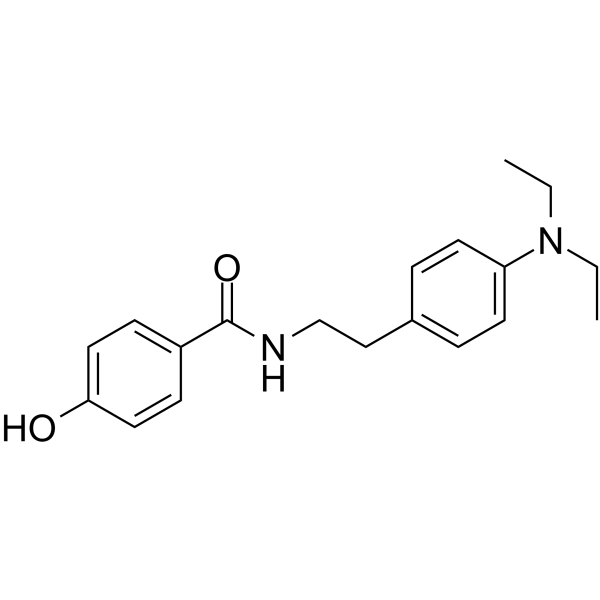
SLU-PP-332
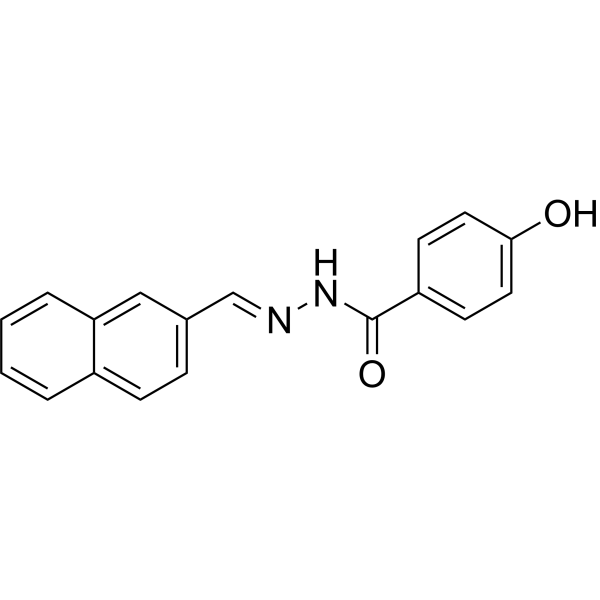 0 ImagesSLU-PP-332 is a pan-Estrogen Receptor/ERR agonist with EC50 values of 98, 230 and 430 nM for ERRα, ERRβ and ERRγ, respectively. SLUPP-332 enhances mitochondrial function and cellular respiration in skeletal muscle cell lines. SLU-PP-332 has the potential to study metabolic diseases as well as improve muscle function.
-
2-Ethylhexyl diphenyl phosphate
 0 ImagesArt. -Nr.: HY-W009066CAS. Nr.: 1241-94-7Synonyms: EHDPP; Octicizer2-Ethylhexyl diphenyl phosphate is an organophosphate flame retardants (OPFRs) and a PPARG agonist (EC20: 2.04 µM). 2-Ethylhexyl diphenyl phosphate also inhibits ERRγ transcriptional activity (IC50: 1.3 µM). 2-Ethylhexyl diphenyl phosphate upregulates 3β-HSD1, human chorionic gonadotropin (hCG) and progesterone secretion. 2-Ethylhexyl diphenyl phosphate can be used in studies of female reproduction and fetal development.
-
ERRγ-IN-1
 0 ImagesArt. -Nr.: HY-177011CAS. Nr.: 2170732-60-0ERRγ-IN-1 is a ERRγ inhibitor with an IC50 of 0.040 μM. ERRγ-IN-1 activates MAPK (p44/p42) and inhibits the activity of ERRγ. ERRγ-IN-1 significantly increases iodine uptake in anaplastic thyroid carcinoma xenografts and suppresses tumor growth in nude mice. ERRγ-IN-1 is applicable for the research of anaplastic thyroid carcinoma.
-
ERRγ inverse agonist 2
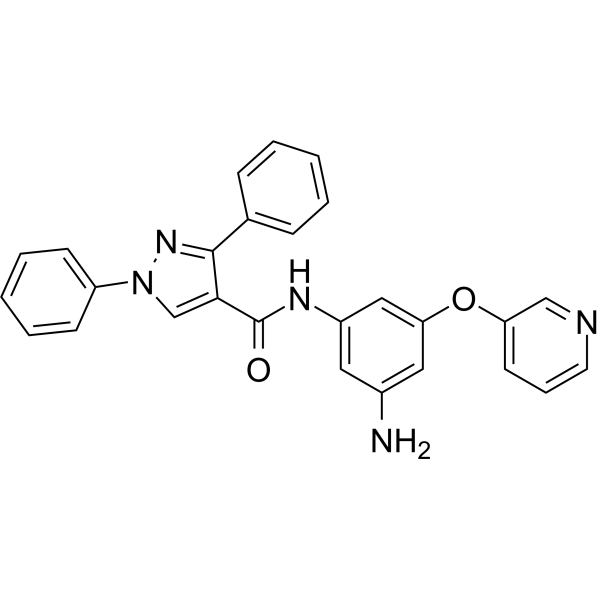 0 ImagesArt. -Nr.: HY-149833CAS. Nr.: 324022-01-7
-
ERRγ inverse agonist 1
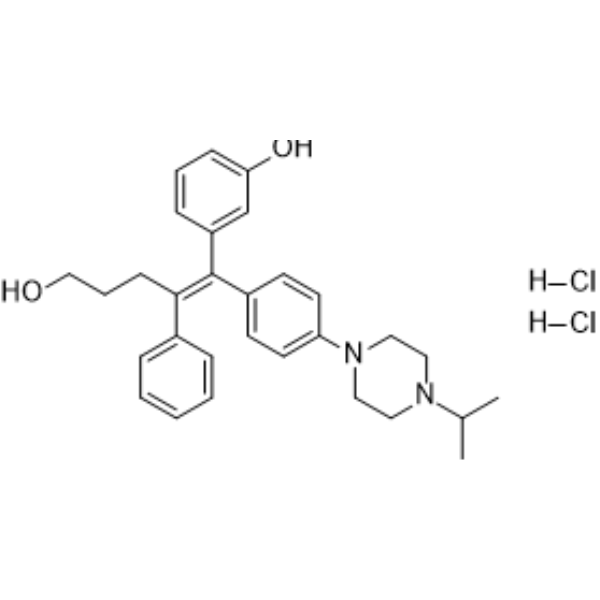 0 ImagesArt. -Nr.: HY-114411CAS. Nr.: 2316832-86-5



